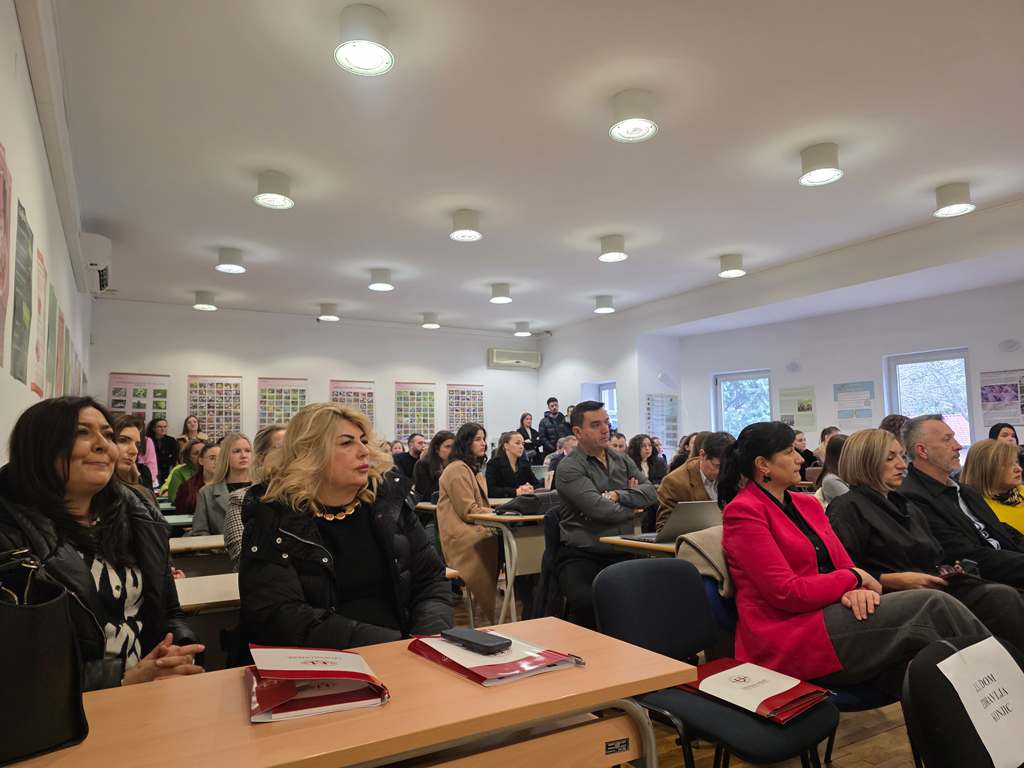
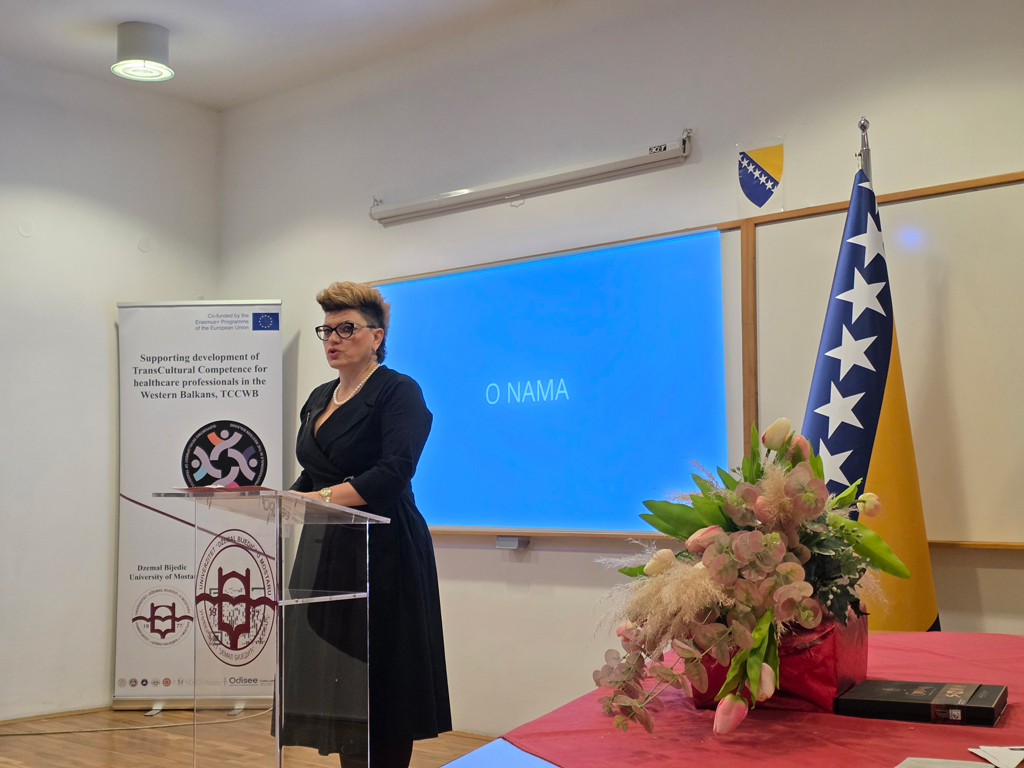
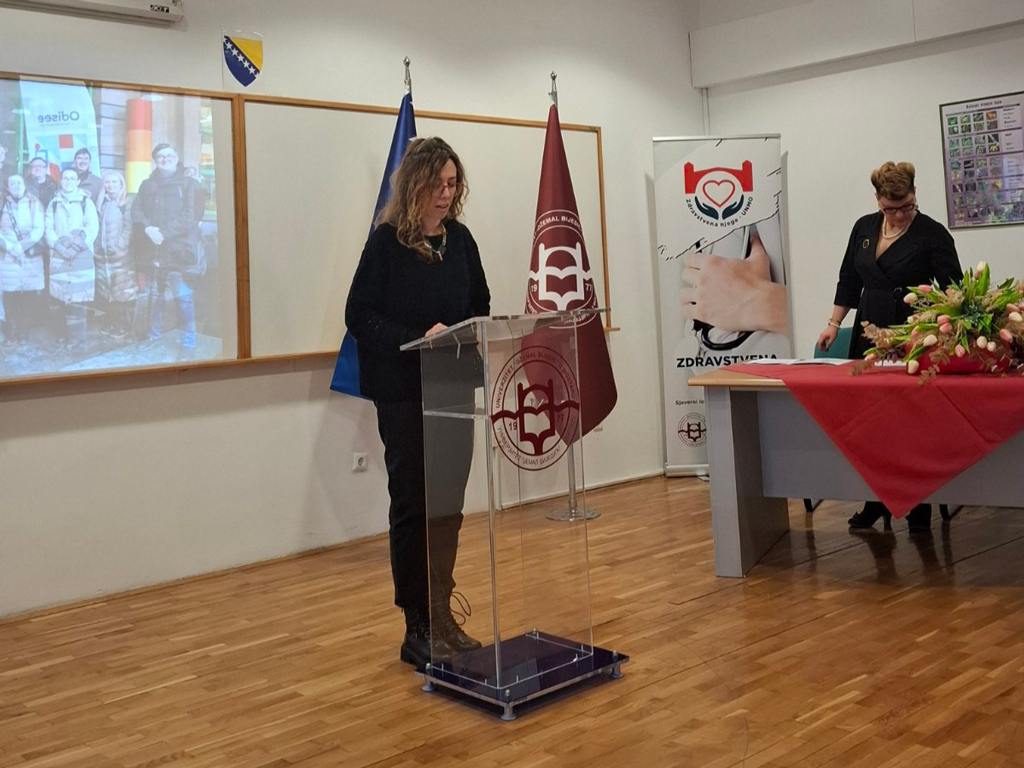
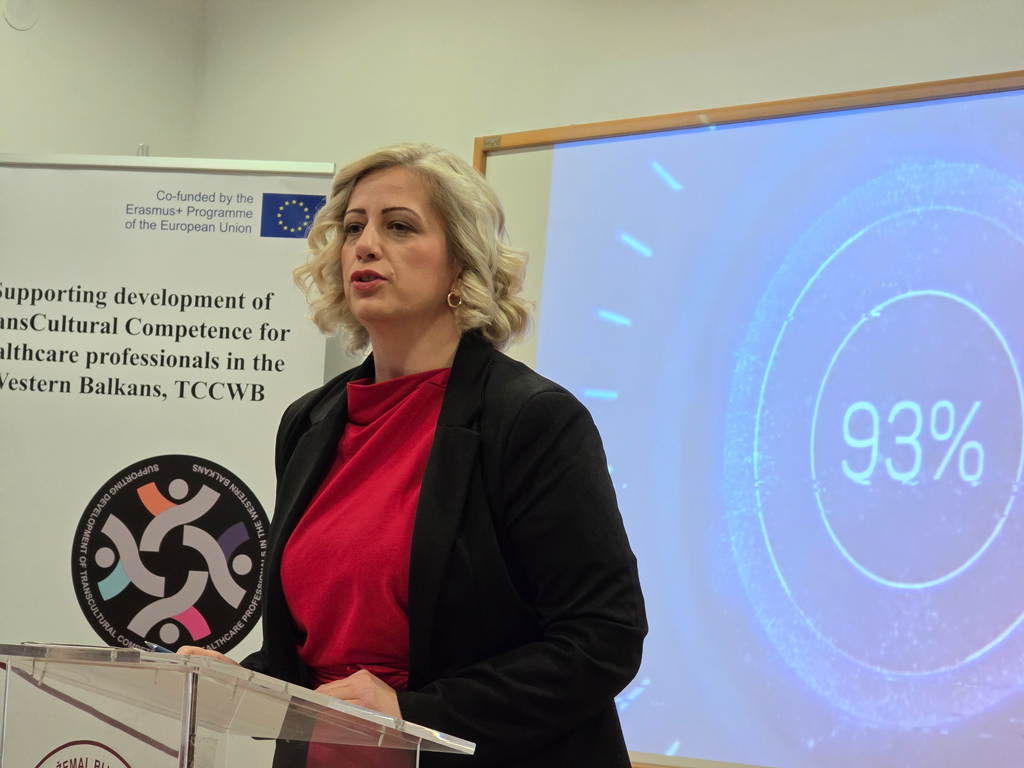
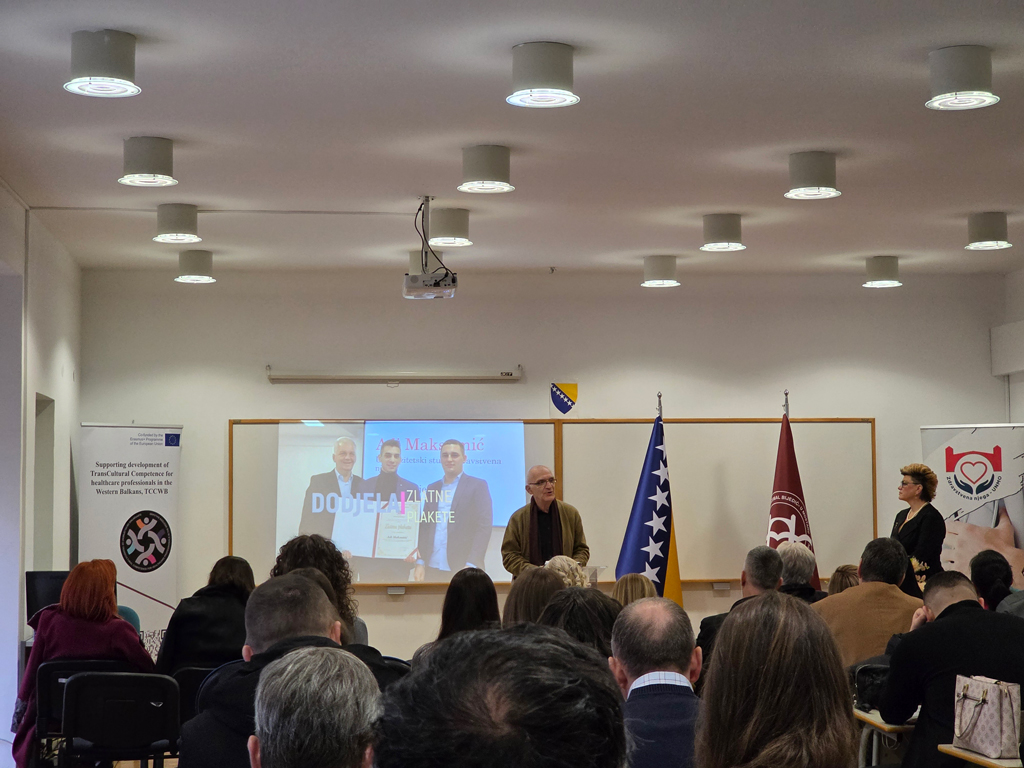
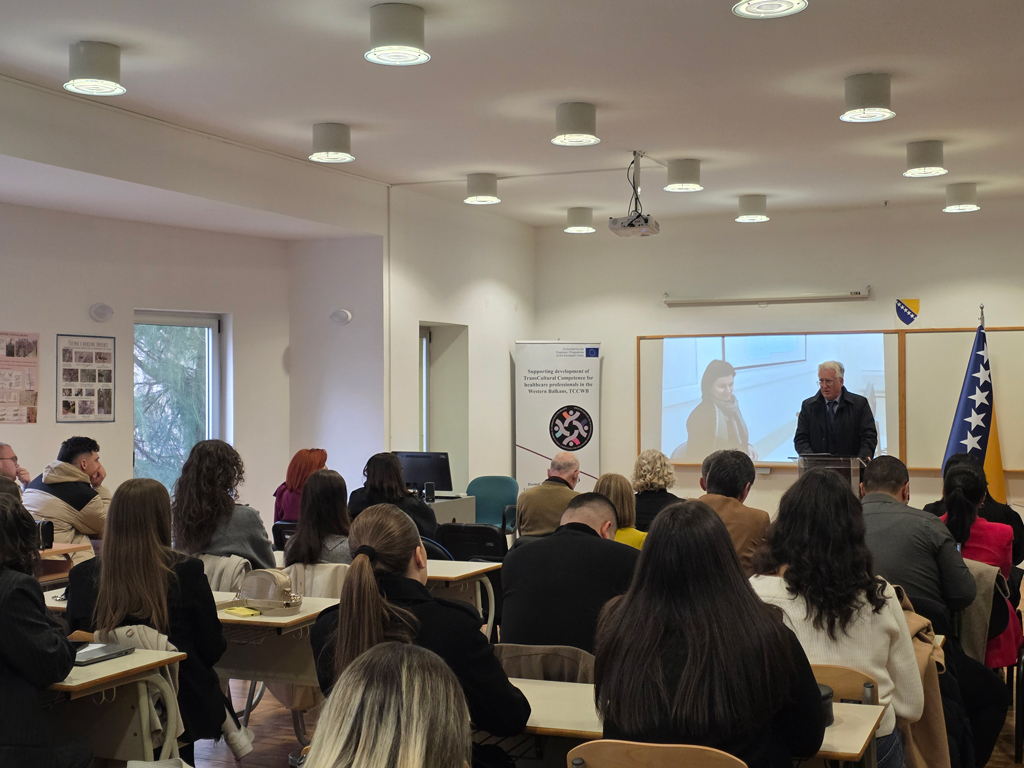
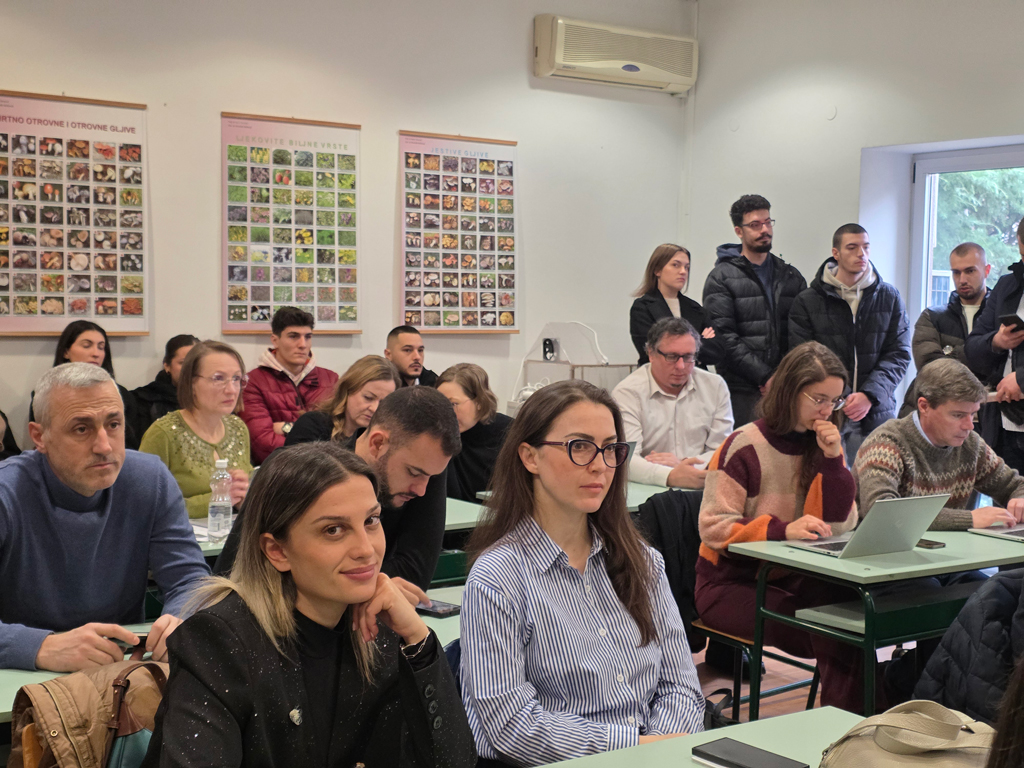
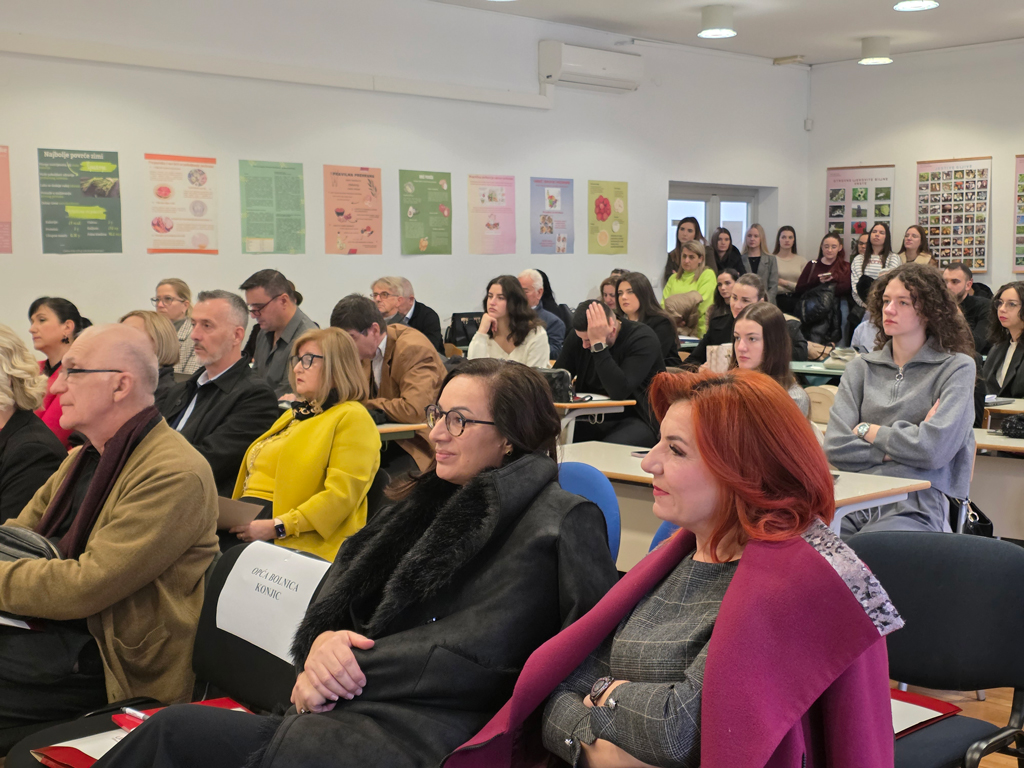
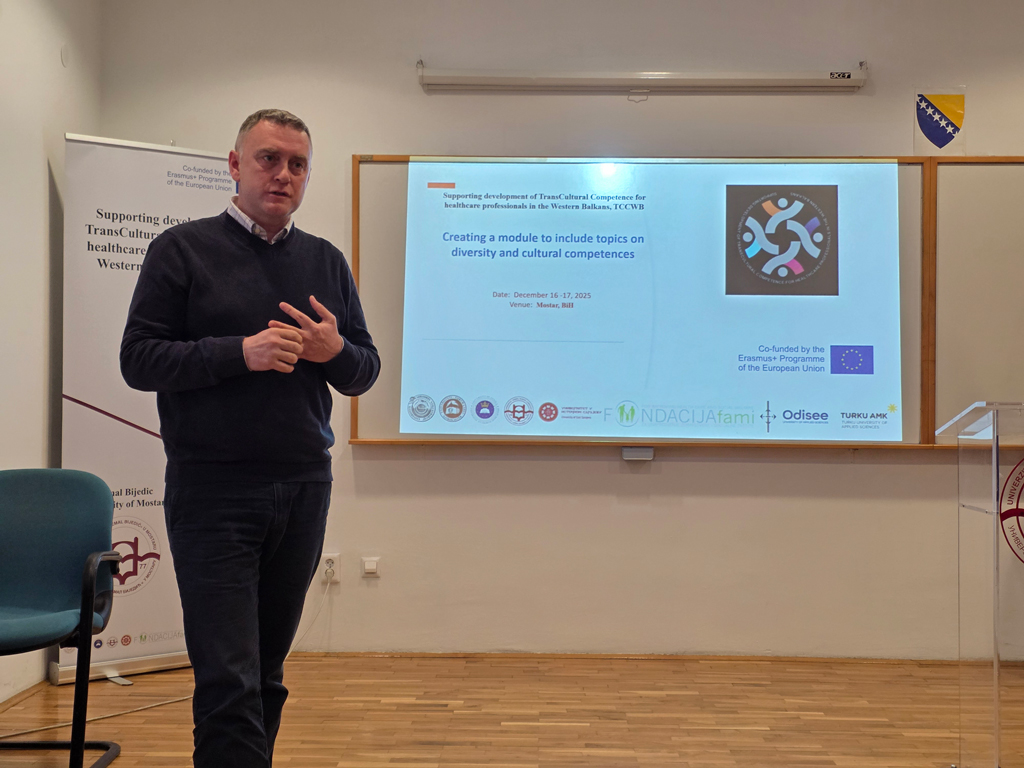
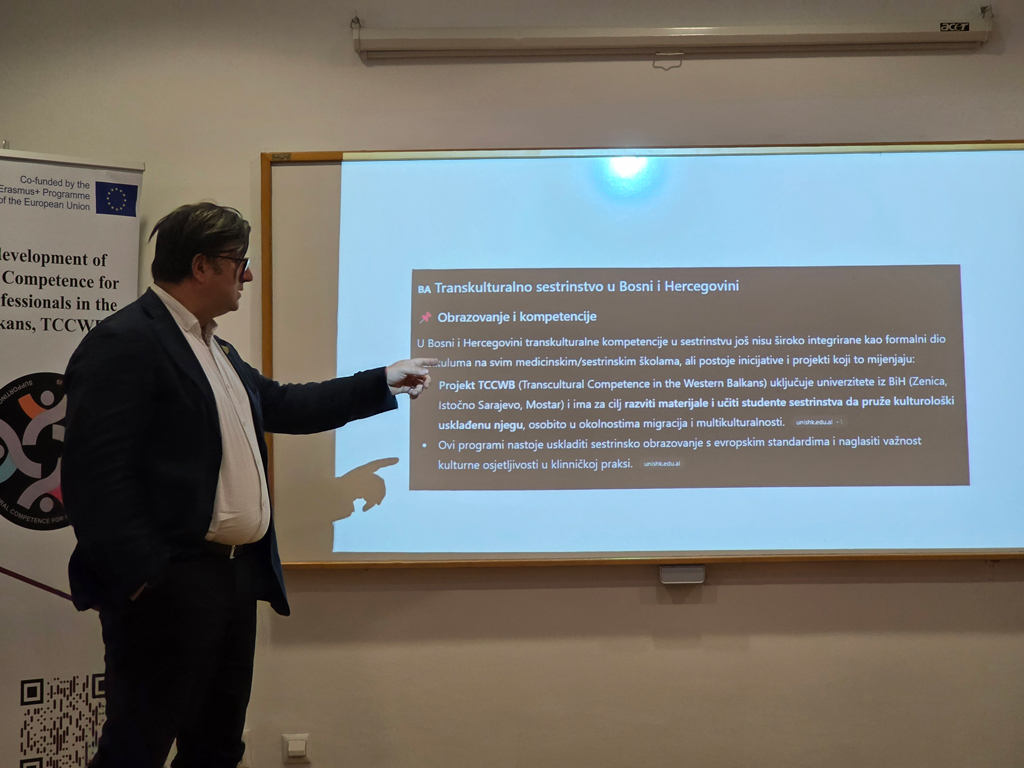
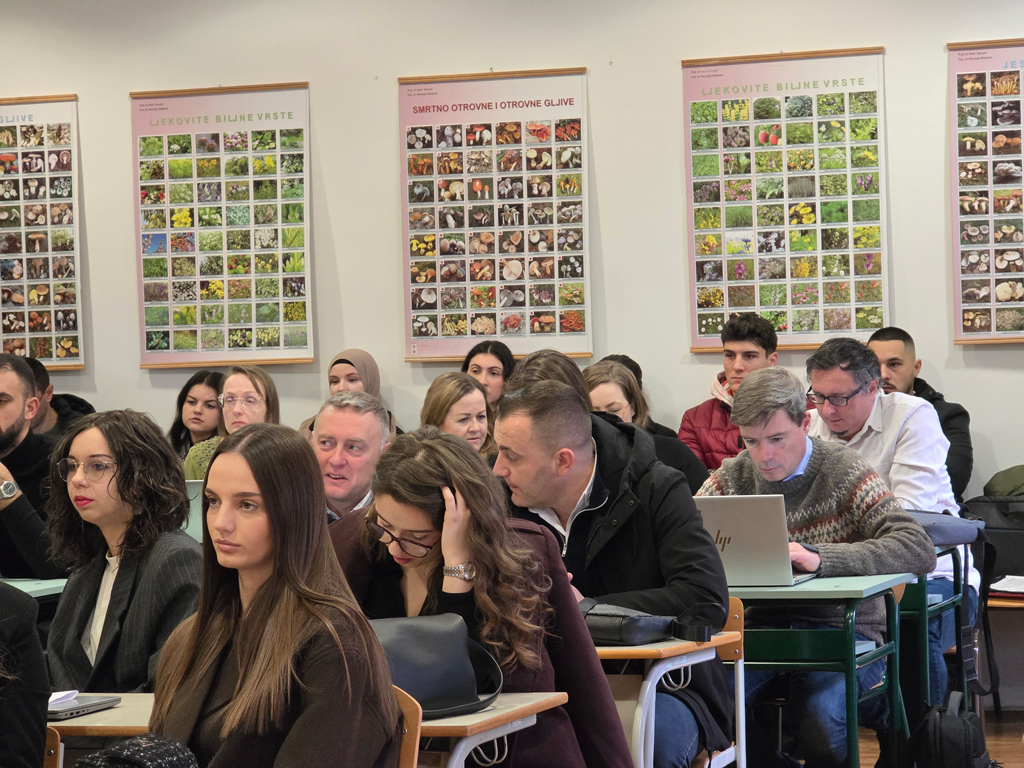
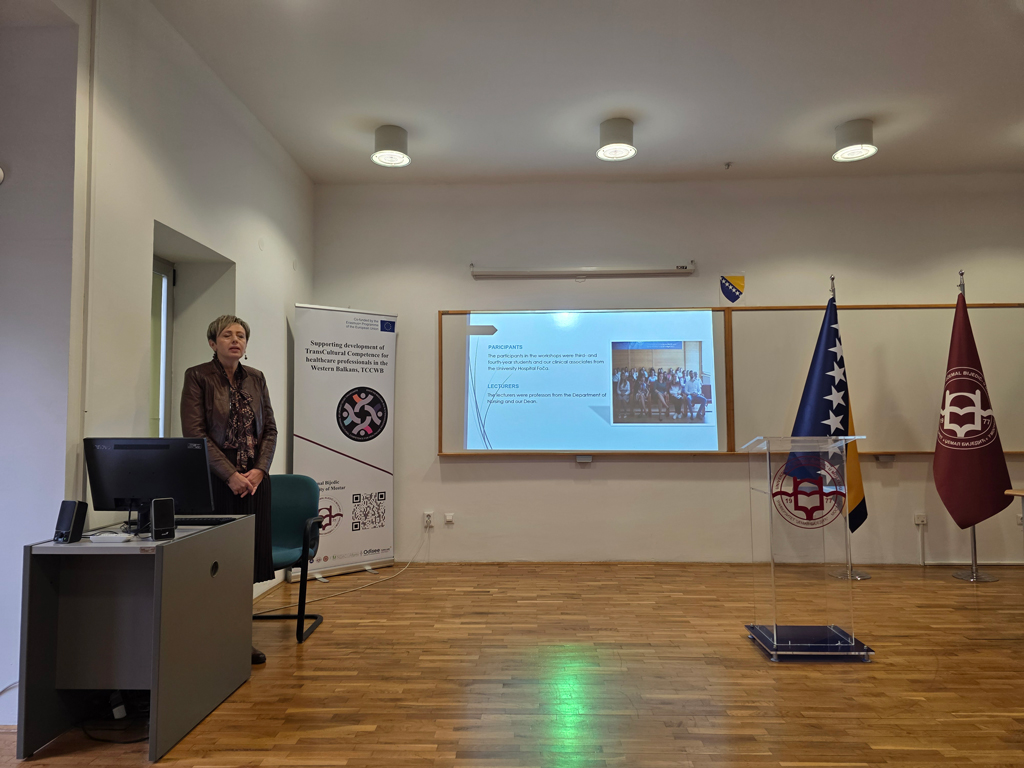
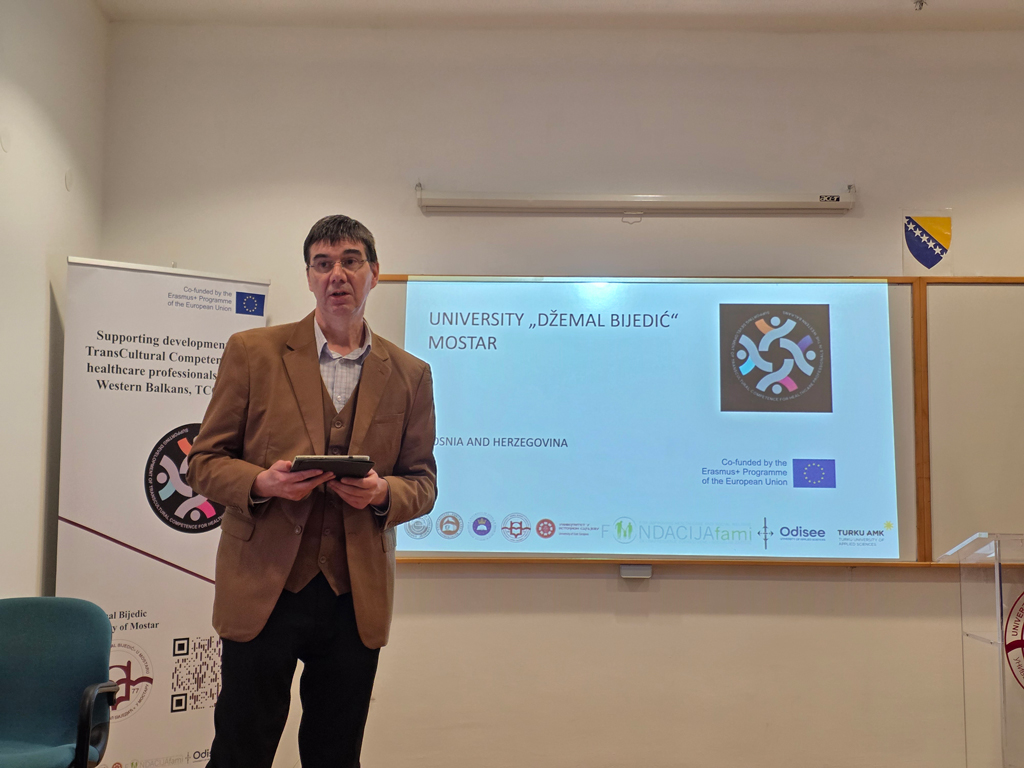
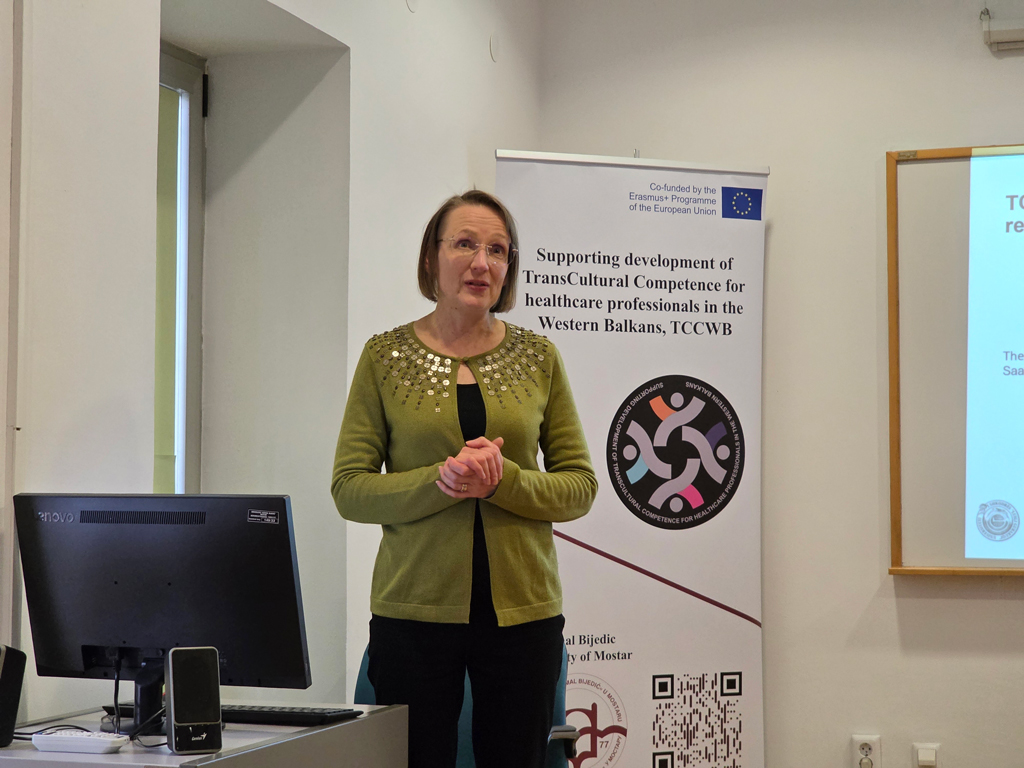
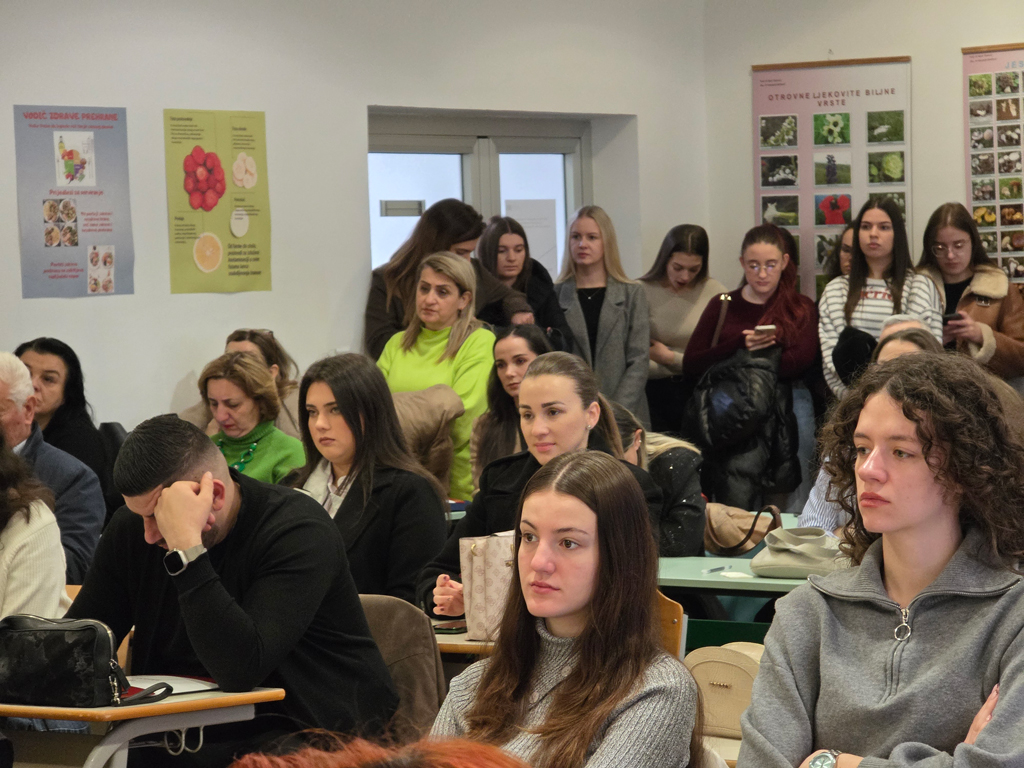
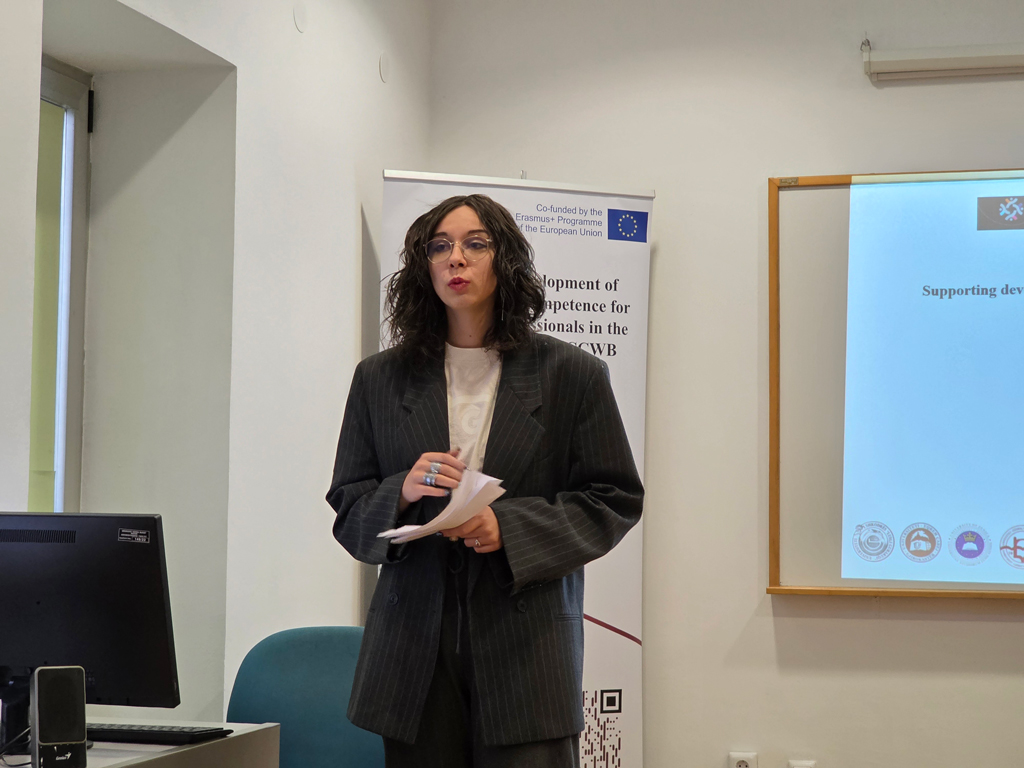
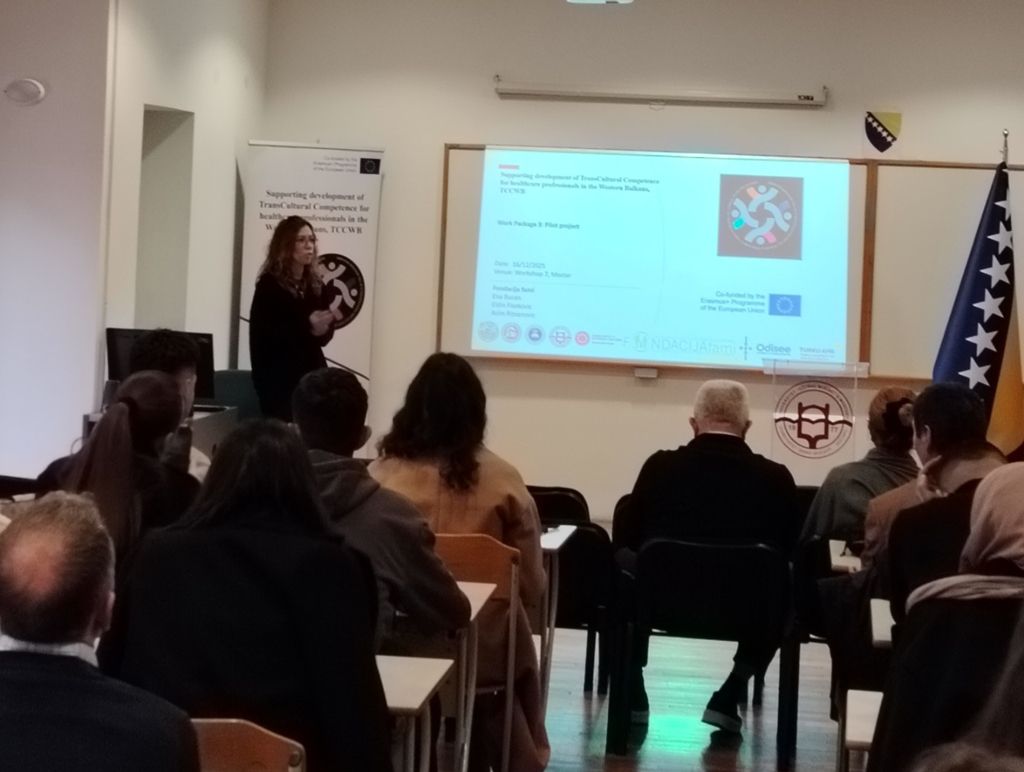
The seventh workshop within the Erasmus+ project TCCWB – TransCultural Competence for Healthcare Professionals in the Western Balkans – was held at the Faculty of Agri-Mediterranean Studies, University of “Dzemal Bijedic” in Mostar. The workshop was dedicated to disseminating the project results and strengthening cooperation between higher education institutions, the healthcare system, and practice-based organizations.
The workshop was opened with introductory remarks by representatives of the University of “Dzemal Bijedic” in Mostar. Prof. Dr. Samra Medjedovic, professor and project coordinator at the university, presented the TCCWB project, emphasizing its strong regional character and long-term goal – the systemic strengthening of healthcare professionals’ transcultural competences through curriculum enhancement, faculty training, and connecting the academic community with healthcare practice.
In her address, Vice-Rector for Science and Research, Assoc. Prof. Dr. Amela Piralic, highlighted the role of the university as a driver of socially responsible development and a reliable partner for the healthcare sector. She emphasized that the TCCWB project, through high-quality international partnership, has demonstrated how concrete and long-term improvements can be achieved in higher education and healthcare practice, particularly in the context of building an inclusive and culturally sensitive healthcare system. It was also noted that the project results will remain permanently integrated into the University’s study programs and will continue to shape future generations of healthcare professionals.
Partner institutions in the project – universities and organizations from the region, including UNIGJIRO, UNSHK, UNZE, and UES, as well as the University of “Dzemal Bijedic” in Mostar – presented an overview of implemented activities, examples of good practice, and achieved results in curriculum development, faculty training, and institutional capacity building. The presentations were accompanied by open discussions on challenges encountered during project implementation, as well as clear indicators of its value for the educational and healthcare systems of the Western Balkan countries.
The afternoon session was devoted to presentations by partner organizations from practice, including the FAMI Foundation and SMOC. FAMI Foundation shared its experiences and contributions to the project, emphasizing the importance of multidisciplinary collaboration, the involvement of organizations that work directly with healthcare service users, and the need to recognize the needs of healthcare workers in everyday practice.
The workshop once again confirmed that the TCCWB project is an example of successful linking of knowledge, experience, and public interest, with a clear ambition to create lasting and positive changes. Through strong partnerships between the academic community, the healthcare sector, and practice-based organizations, TCCWB contributes to the development of a more inclusive, culturally sensitive, and sustainable healthcare system in Bosnia and Herzegovina and the broader Western Balkan region.